
The components of a luxury corporate event budget, where the money goes, and the line items that surprise first-time hosts most.
What a Luxury Venue Actually Costs
A luxury corporate event budget is built from components that compound: the room, the food and beverage, the production, the staff, and the quiet line items that first-time hosts rarely anticipate. Understanding the structure is the difference between a considered budget and a surprised one.
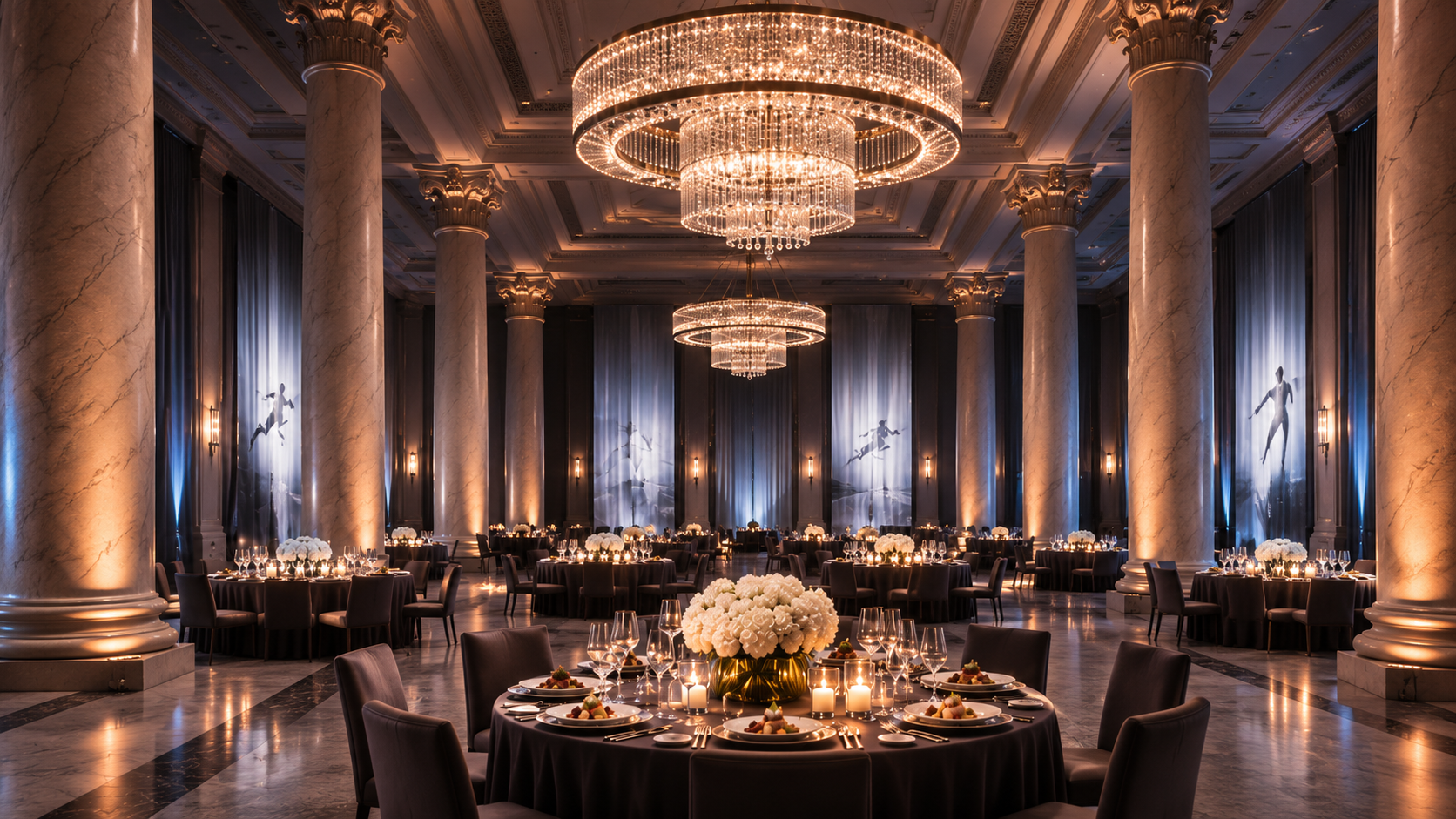
The room is rarely the largest line, but it is the one that sets the rest. A room rental or a food-and-beverage minimum establishes the floor; everything else is built on top. Negotiate the room first, and understand the minimum before the menu.
Food and beverage is usually the largest variable, and the one where taste and price diverge most sharply. A tasting menu with pairing for twenty will cost meaningfully more per guest than a substantial canapé reception, and suits a different occasion. Match the format to the purpose, not the budget to the format.
Production, lighting, sound, floral, staging, is where budgets quietly expand. The discipline is the same as the menu: serve the occasion, not the spectacle. A single considered floral gesture outperforms a room of production in most corporate settings.
The surprising line items are the operational ones: coat check, valet, security, gratuities, and the staff the venue requires. These are not optional, they are not always itemized, and they are the difference between the quote and the actual cost. Ask for them, explicitly, at the proposal stage.
The essentials, in brief
- Negotiate the room and its minimum before you design the menu.
- Match the format to the purpose, then the budget to the format.
- Brief production to restraint; a single gesture outperforms a room of spectacle.
- Ask for the operational line items, coat check, valet, security, at the proposal stage.
A closing note
The budget that holds is the one whose structure was understood before the spending began. Value is attention applied well; cost is money spent without it.
The room as the budget's foundation
The room is rarely the largest line, but it is the one that sets the rest. A room rental or a food-and-beverage minimum establishes the floor of the budget, and every other cost is built on top of it. Negotiate the room first, and understand the minimum before you design the menu, because the minimum, not the menu, is the budget's first constraint.
The structure matters as much as the number. A flat rental gives you cost certainty and freedom on the menu; a spend commitment gives you flexibility on the room but variable cost on the food and beverage. Confirm which structure you are buying before you compare venues, or the comparison is meaningless.
- The room rental or food and beverage minimum is the budget's floor.
- Negotiate the room first, before you design the menu.
- Understand the minimum, not the menu, as the first constraint.
- Confirm whether the structure is a flat rental or a spend commitment.
Food and beverage as the largest variable
Food and beverage is usually the largest variable in the budget and the one where taste and price diverge most sharply. A plated tasting dinner with pairing costs meaningfully more per guest than a substantial canapé reception, and suits a different occasion entirely. Match the format to the purpose, then the budget to the format, never the reverse.
The service charge and tax compound on the per-guest price, and they are the difference between the quoted figure and the true cost. Add them to every line before you compare formats, or the comparison flatters the more expensive option. A menu that reads as reasonable on the page can be the largest line on the invoice.
- Food and beverage is usually the largest variable in the budget.
- A plated tasting dinner costs far more per guest than a canapé reception.
- Match the format to the purpose, then the budget to the format.
- Add the service charge and tax to the per-guest price to find the true cost.
Production and the discipline of restraint
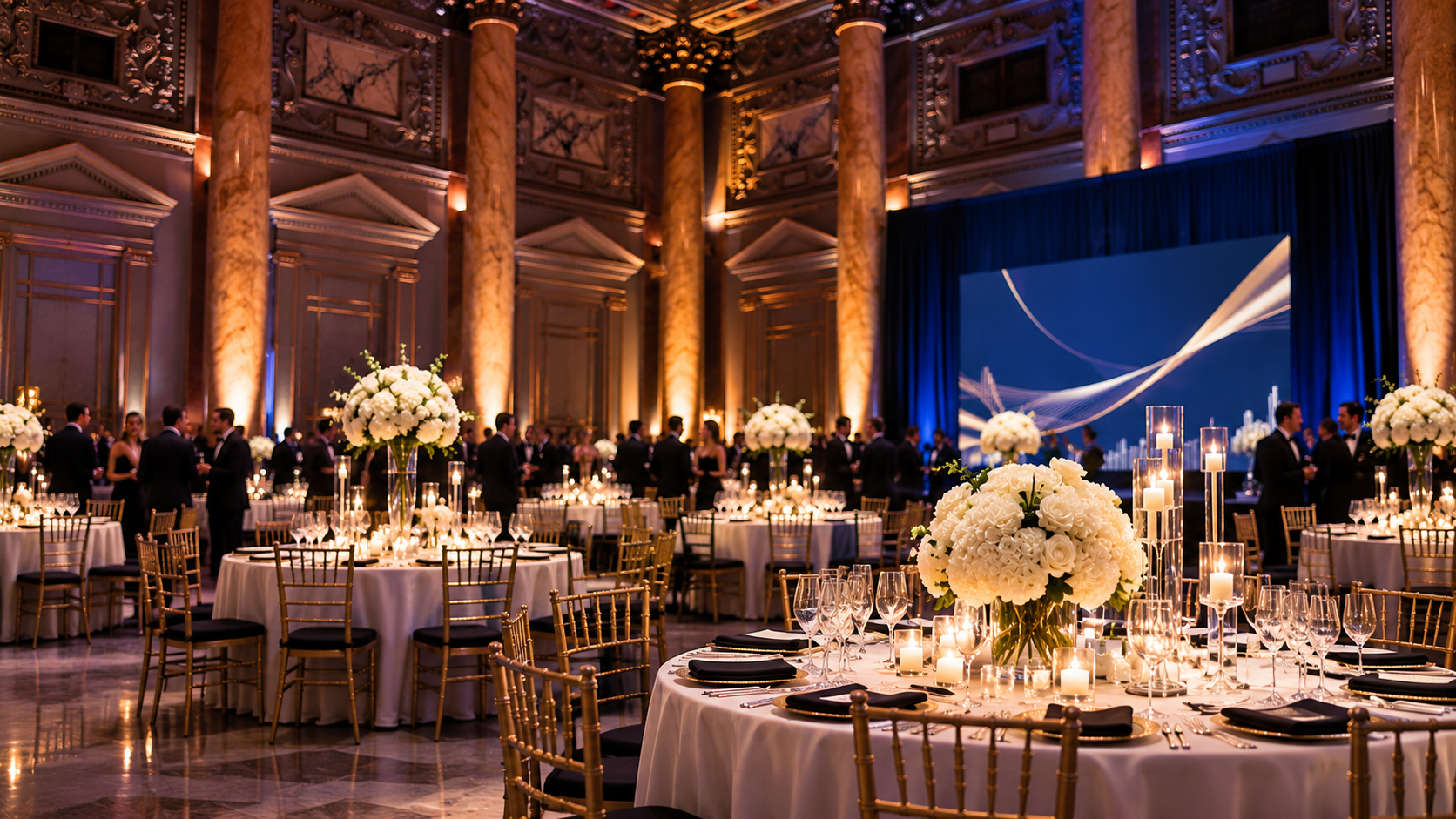
Production, lighting, sound, floral, and staging, is where budgets quietly expand without obvious cause. The discipline is the same as the menu: serve the occasion, not the spectacle. A single considered floral gesture outperforms a room of production in most corporate settings, and at a fraction of the cost.
Brief production to the same brief as the menu so both serve the purpose. The corporate occasion is relational, not theatrical, and the venue's job is to support the relationship rather than to announce itself. Restraint, here, is the more confident and the more economical choice.
- Production is where budgets quietly expand without obvious cause.
- A single considered floral gesture outperforms a room of production.
- Brief production to the same brief as the menu: serve the occasion.
- Restraint is the more confident and the more economical choice.
The operational lines that surprise hosts
The line items that surprise first-time hosts are the operational ones: coat check, valet, security, gratuities, and the staffing the venue requires. These are not optional, they are not always itemized in the quote, and they are the difference between the proposal and the invoice. Ask for them explicitly at the proposal stage, and the budget holds.
Hold a contingency of ten to fifteen percent for the costs that were not itemized. The budget that holds is the one whose structure was understood before the spending began, and the structure includes the lines no one volunteers. Value is attention applied well; cost is money spent without it.
- Coat check, valet, security, and gratuities are the lines that surprise hosts.
- These operational items are not optional and not always itemized.
- Ask for them explicitly at the proposal stage so the budget holds.
- Hold a 10 to 15 percent contingency for the costs that were not itemized.