The Fullest Formality
Black-Tie Corporate Dinners, NYC
The discipline of the black-tie corporate dinner, formality, precedence, and a guest experience worthy of dress codes.
The black-tie dinner is the fullest expression of corporate formality, and the format where protocol earns its keep. Precedence, the receiving line, the toast, the seating, each is a courtesy that, handled well, lets the evening breathe and, handled poorly, makes it stiff, the choreography the formal dinner planning guide guide treats in full.
The venue must hold grandeur and intimacy at once: a room with the architecture for ceremony, the light for a long evening, and staff fluent in the choreography of a formal service. The dress code is the easy part; the discipline is the rest, and the luxury awards ceremonies format shares the same theatrical restraint.
The Audience
Firms hosting the most formal corporate occasions, galas, charitable dinners, and occasions of genuine ceremony.
Discuss This Event TypeIdeal Ambiance
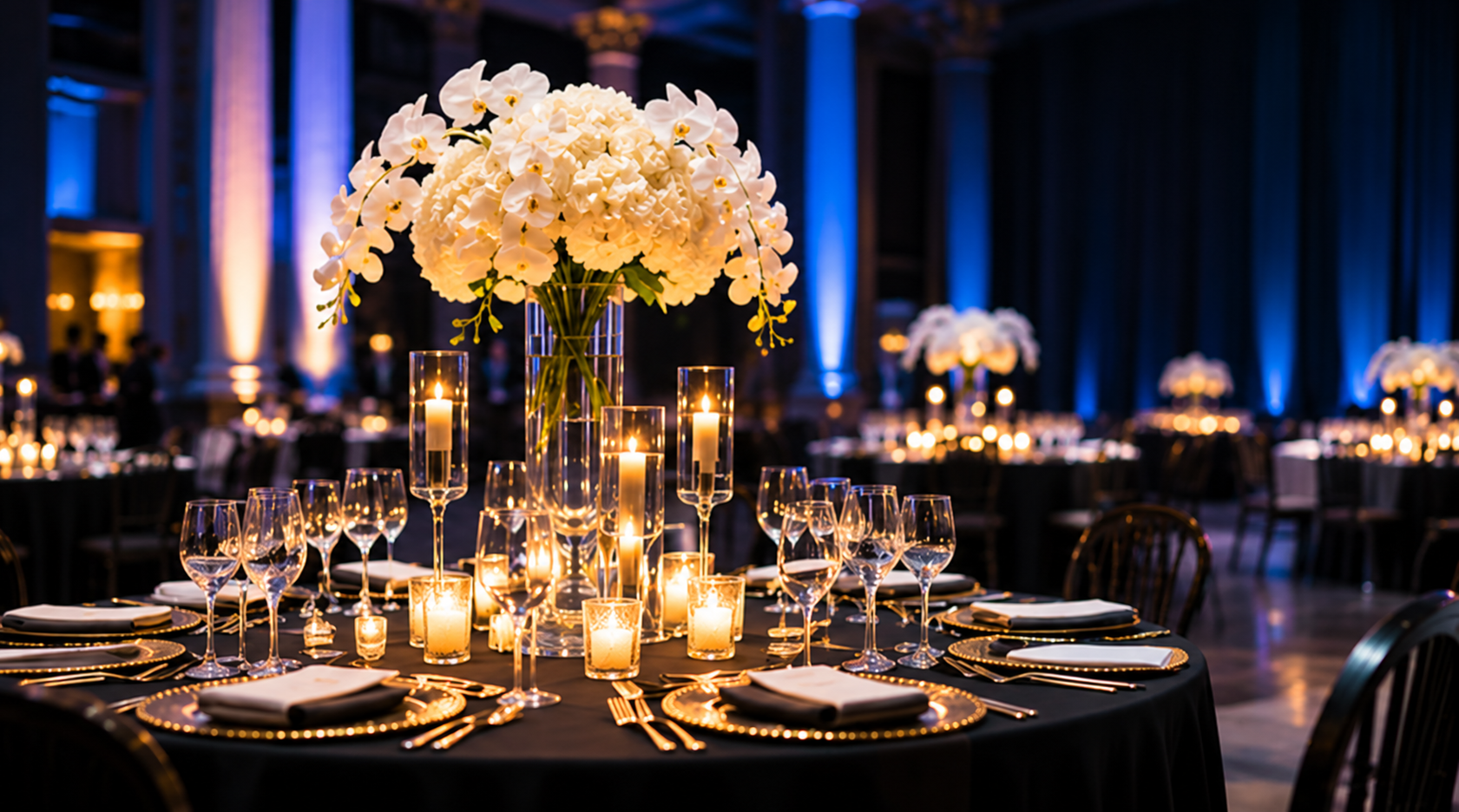
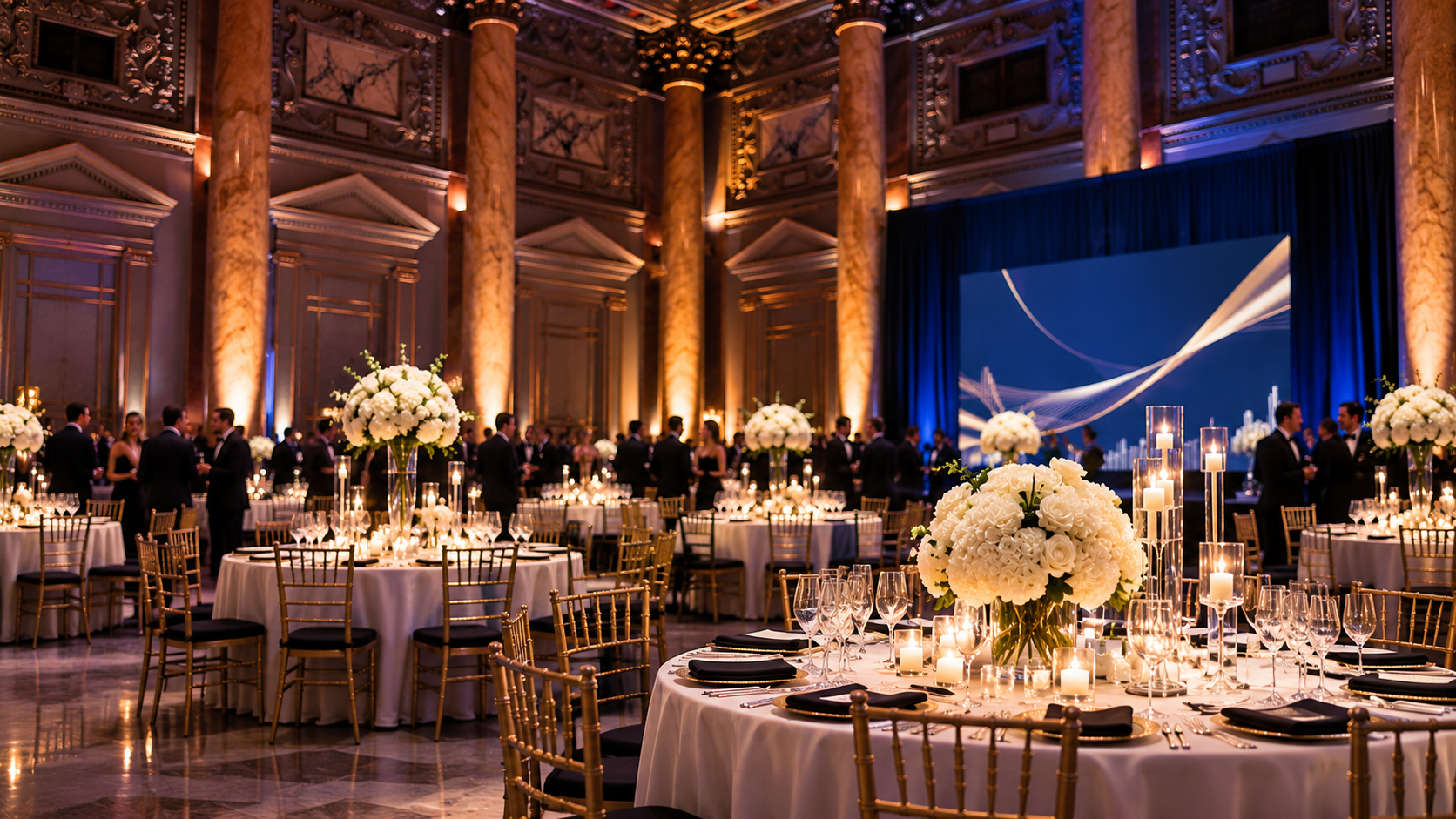
Grand and composed. A room of architectural presence, chandeliers, paneling, tall ceilings, lit for a long evening and set for ceremony without severity.
Hospitality Needs
What the room owes the guest
- A receiving line or formal greeting where precedence applies.
- Full formal service, the kitchen and floor in concert.
- A considered toast with the timing and the right speaker.
- A composed close; the evening ends, it does not wind down.
Guest Experience
The impression that lasts
- A clear sense of occasion from arrival to the first course.
- Seating that honours precedence without embarrassment.
- Service that is formal but never stiff.
Privacy Requirements
Discretion by design
Whole-venue booking is standard; the formality assumes a private room of appropriate grandeur. Control entry and confirm the room reads as the firm's for the evening.
Catering Considerations
The menu in service
Full formal service, multiple courses, pairing, and the timing choreographed to the program. The kitchen's discipline is the evening's quiet backbone.
Seating Formats
Formats that suit the occasion
Top table
A head table with the principal guests, the room in support.
Round banquet
Formal rounds with precedence reflected in placement.
Receiving + banquet
A reception preceding the seated, formal dinner.
Planning Tips
From the host's brief
Confirm precedence with the host's office before seating.
Choreograph the toast to a course, not to a silence.
Brief service on the formality of the evening.
End decisively; formality rewards a composed close.
A host's final checklist
- Confirm the room's grandeur against the formality a black-tie dinner demands.
- Brief the kitchen on the course timing before the first guest sits down.
- Confirm precedence with the host's office before you seat the room.
- Walk the space at the hour of your dinner to judge light and ceremony.
Before you sign
Confirm the precedence, the staffing ratio, and the course timing in the contract. The black-tie dinner's formality is protected by the terms that govern the room.
The Fullest Expression of Form, In Depth
Planning a black-tie corporate dinner in New York City
A black-tie corporate dinner is the fullest expression of corporate formality, and the venue that hosts it must hold grandeur and intimacy at once. This section breaks down what makes a New York room right for a black-tie dinner, from the architecture for ceremony to the choreography of formal service.
The architecture for ceremony
A black-tie corporate dinner venue is chosen for its architecture for ceremony. The room must hold the weight of the form, which means a height and a scale that give the occasion its gravity, a light that flatters a long evening, and a standard of materials that holds the form without stiffness. A room that is too low will flatten the ceremony; one that is too casual will undermine it; the right room gives the form its due.
The room's natural state at the hour of the event is the second quality. A black-tie dinner is an evening occasion, and a room that is luminous at midday may be forbidding by lamplight. Walk the space at the hour you intend to use it, and confirm the lighting holds the form through a long evening. The visit costs nothing and prevents the most expensive mistake in formal entertaining.
- Choose the room for its architecture for ceremony, with height, scale, and light.
- The room must hold the weight of the form without stiffness.
- A room too low flattens the ceremony; one too casual undermines it.
- Walk the room at the hour of the event; the lighting must hold through a long evening.
The choreography of formal service
A black-tie dinner demands the choreography of formal service, and the venue's staff must be fluent in it. The pacing of each course, the pouring, the clearing, and the close are each a movement that should be held without intervention, and a staff that is fluent in formal service will hold them as a habit. Confirm the venue's history with formal dinners before booking; a staff that hosts them regularly will execute to the standard without instruction.
The seating and the precedence
The seating at a black-tie corporate dinner follows precedence, and the seating plan is the single decision that most shapes the form of the evening. The guest of honor sits at the place the precedence assigns, and the table is arranged around them to balance the conversation and the form. A table arranged for precedence and against conversation is a table that fails its purpose, and the seating should hold both.
Plan the seating plan in advance and confirm it with the venue. The place cards, the table shape, and the order of the seats are each a detail that should be settled before the night, and a seating plan that is changed at the door diminishes the form. The precedence is the form's structure, and the seating that holds it is the seating that serves the occasion.
- The seating follows precedence; the plan is the decision that most shapes the form.
- The guest of honor sits at the place the precedence assigns; the table balances around them.
- A table arranged for precedence and against conversation fails its purpose.
- Plan the seating in advance; a plan changed at the door diminishes the form.
The Dinner in Practice
Running a black-tie corporate dinner
A black-tie dinner is a formal occasion, and the host's discipline is what holds its form. This section sets out the decisions a considered host makes to run the dinner with grandeur and intimacy.
The reception and the procession
The reception that precedes a black-tie dinner sets the tone of the form, and it should be held with composure. A reception long enough to allow the guests to settle, a welcome that holds the form's standard, and a procession to the table that is handled with intention are the structure that serves the format. A reception that is too short will rush the form; one that is too long will fatigue it, and the right length is the one that settles the room without exhausting it.
Plan the procession to the table deliberately. The guests should move from the reception to the dinner room without confusion, and the seating should be clear without announcement. A procession that is handled with intention gives the form its weight; one that is fumbled diminishes it, and the difference is the difference between a dinner that was planned and one that was assembled.
- The reception sets the tone of the form; it should be held with composure.
- A reception, a welcome, and a procession to the table are the structure that serves the format.
- A reception too short rushes the form; one too long fatigues it.
- Plan the procession deliberately; a handled procession gives the form its weight.
The close and the composure
The close of a black-tie dinner is the host's last act, and it should hold the form's composure. A composed finish, a final round, and a private departure are the marks of a host who has held the form. A black-tie dinner that ends abruptly diminishes the form; one that closes with composure completes it, and the close is the impression the guests carry forward.
The follow-through is what completes the form. A note the next morning, in keeping with the form's tone, is the gesture that completes the occasion, and it is the detail most often omitted. The black-tie dinner is the fullest expression of corporate formality, and the host who holds its form through the close is the host whose formal occasions are remembered.
- The close should hold the form's composure; it is the host's last act.
- A composed finish, a final round, and a private departure are the marks of a held form.
- An abrupt close diminishes the form; a composed close completes it.
- A morning note in keeping with the form's tone completes the occasion.
Frequently Asked Questions
Black-Tie Corporate Dinners, NYC, questions executive hosts ask
The detail that distinguishes a considered occasion from a routine one. These are the questions our advisors are asked most often.
Still planning your occasion? Request a private event proposal.
Continue Reading
Related event types & guides
Begin the Conversation
Request a Private Event Proposal
Tell us about the occasion, the guest of honor, and the impression you intend to make. We will respond with considered guidance on venue selection, hospitality, and the sequence of a luxury corporate event.