The Unspoken Rules
Private Event Etiquette
Private event etiquette is the set of unspoken rules that separate an occasion that builds a relationship from one that merely occupies an evening. They are not arcane; they are the courtesies that, observed, disappear into the occasion and, neglected, are the only thing the guest remembers.
Discretion First
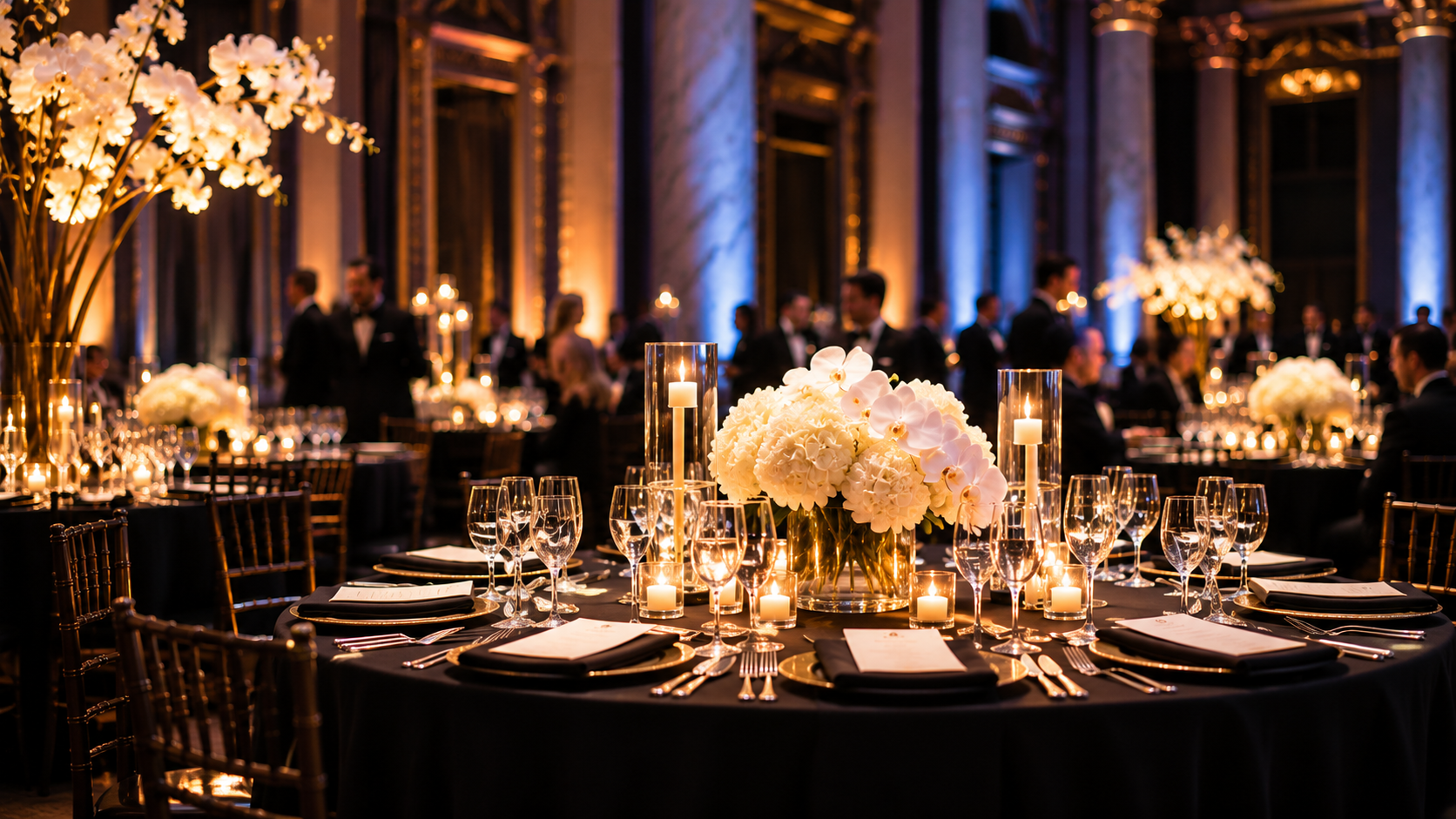
The first courtesy is discretion. What is said at the event stays at the event; who attended is not advertised; the staff do not remark. Discretion is a brief and a venue choice, in that order, brief the staff to it, choose a room that supports it, and the rest follows.
Key points
- What is said at the event stays at the event; who attended is not advertised.
- Discretion is a brief and a venue choice, in that order.
- Brief the staff on confidentiality as a principle, not a list of names.
- Choose a room that supports discretion so it is effortless, not a constant effort.
The Host's Attention
The host's attention is the evening's currency. A host who watches the room, draws in the quiet guest, and releases the talkative turns a meal into an occasion. A host who is distracted, however good the room, has given the evening away.
Key points
- The host's attention is the evening's currency and the variable money cannot buy.
- Watch the room, draw in the quiet guest, and release the talkative.
- A distracted host has given the evening away, however good the room.
- Plan the host's role as deliberately as the menu.
The Courtesy of Pacing
Pacing is a courtesy owed to the guest. A dinner that drags, a reception that runs long, a program that overstates, each is a discourtesy disguised as hospitality. Hold the tempo, keep the program short, and the occasion respects the guest's time.
Key points
- Pacing is a courtesy owed to the guest's time.
- A dinner that drags or a program that overstates is a discourtesy in disguise.
- Hold the tempo and keep the program short to respect the guest's time.
- The host who paces well is the host who honors the guest.
The Parting Gesture
The last impression is the parting gesture: the car that is waiting, the note the next morning, the quiet thank-you. The guest who leaves feeling looked after is the guest who returns the invitation. Plan the closing as deliberately as the opening.
Key points
- The parting gesture is often the impression that lasts longest.
- Have the car waiting and offer a quiet, personal farewell.
- A note the next morning closes the evening with grace.
- Plan the closing as deliberately as the opening.
The Courtesy of Introduction
A host who leaves guests to fend for themselves has failed the courtesy of attention the occasion requires. The host's role is to make introductions that have reason, naming the common ground that gives two guests cause to talk, and to move through the room drawing in the quiet guest and releasing the talkative. Seat guests thoughtfully so each has common ground, and the conversation the occasion exists to enable happens on its own.
Key points
- Make introductions that have reason, naming the common ground between guests.
- Move through the room drawing in the quiet guest and releasing the talkative.
- Seat guests thoughtfully so each has common ground with their neighbors.
- A host who leaves guests to fend for themselves has failed the occasion.
Frequently Asked Questions
Private Event Etiquette, questions hosts ask
The practical detail that shapes a considered occasion. These are the questions our advisors field most often on this topic.
Still planning your occasion? Request a private event proposal.
Begin the Conversation
Request a Private Event Proposal
Tell us about the occasion, the guest of honor, and the impression you intend to make. We will respond with considered guidance on venue selection, hospitality, and the sequence of a luxury corporate event.