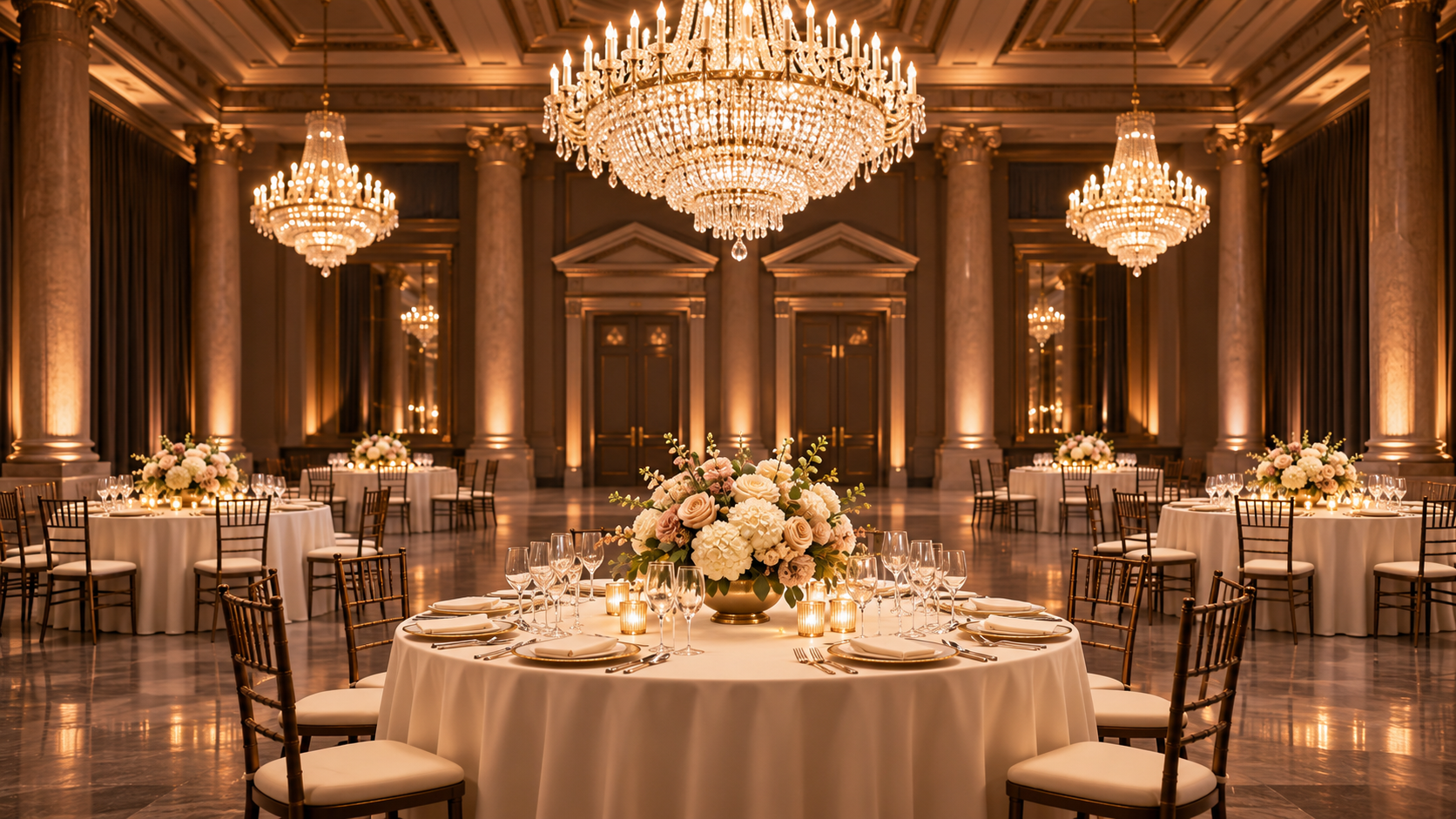
Strategy in the Room
Executive Leadership Events, NYC
Venues and formats for leadership events where the room itself must enable clarity, candor, and genuine engagement.
A leadership event asks the room to do something the office cannot: remove the interruptions, change the perspective, and give senior people permission to think differently. The venue is not backdrop; it is a tool, and our executive event planning guide treats the calendar and the room as the first two decisions.
What supports that is natural light, comfortable and dignified seating, break-out space for candid conversation, and a setting that signals the time is worth protecting. Luxury here means quiet, space, and the absence of compromise, the qualities the luxury corporate events in NYC overview frames for the city.
The Audience
Leadership teams convening for off-sites, summits, or strategy gatherings where the setting must support focus.
Discuss This Event TypeIdeal Ambiance
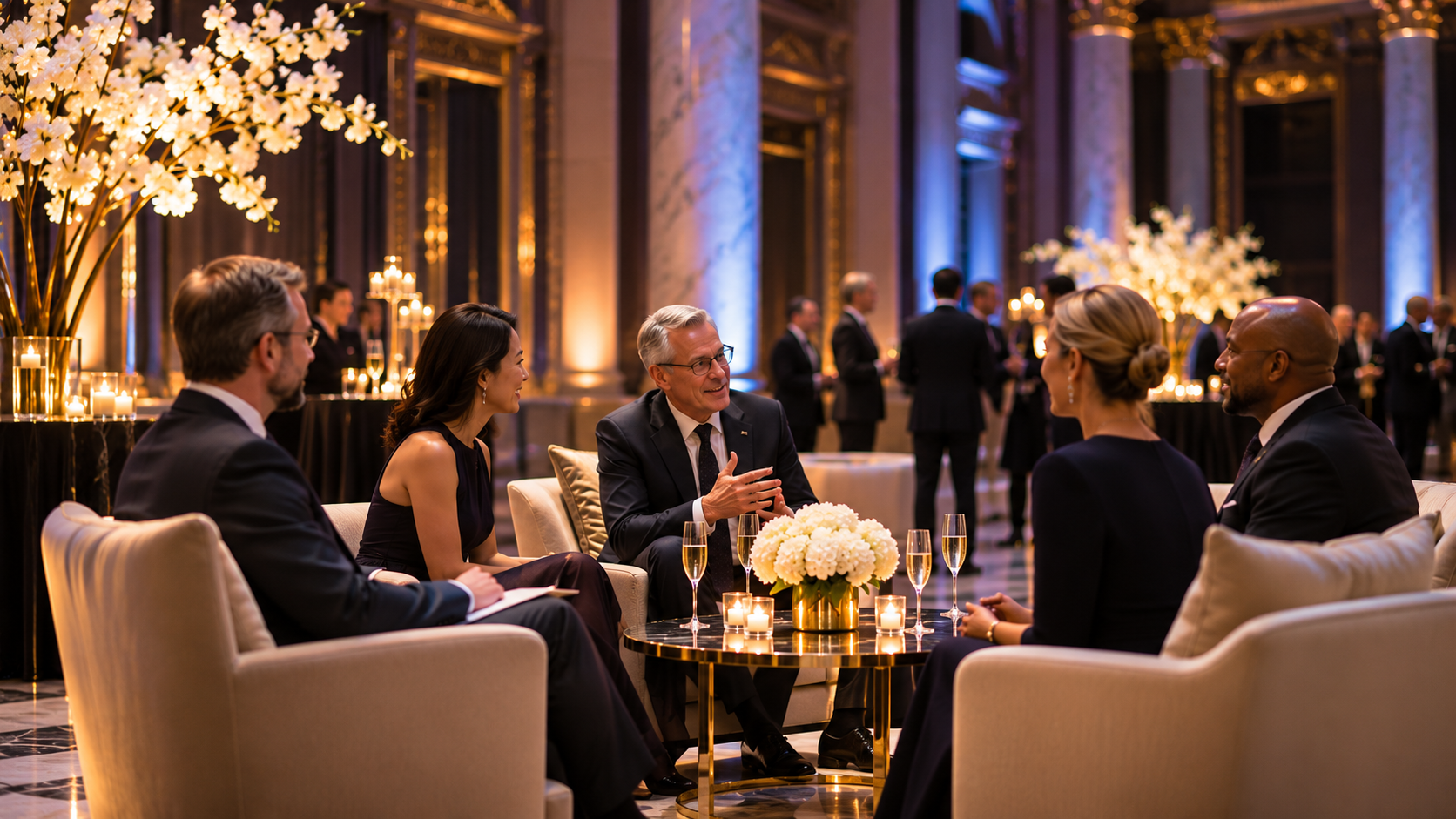
Calm and considered. Daylight, clean lines, and a quiet that allows concentration. Formal enough to command attention, comfortable enough for long sessions.
Hospitality Needs
What the room owes the guest
- Sustained refreshment, water, coffee, light nourishment throughout.
- A dignified lunch that doesn't derail the afternoon.
- Break-out rooms for smaller, candid conversations.
- A reliable, unobtrusive AV and connectivity setup.
Guest Experience
The impression that lasts
- A setting that removes the office's ambient interruptions.
- Comfort that supports long-form attention, not fights it.
- Transitions between plenary and break-out handled smoothly.
Privacy Requirements
Discretion by design
Full privacy is essential for candid strategy discussion. Confirm the room is acoustically isolated and that no shared spaces compromise it, the same test the VIP guest experience guide applies to the most senior gatherings.
Catering Considerations
The menu in service
Nourishment that sustains without inducing lethargy, light, considered, well-paced. Save the heavier hospitality for the closing dinner.
Seating Formats
Formats that suit the occasion
Boardroom
A single large table for the core group.
Crescent
Curved seating for presentation plus discussion.
Break-out
Smaller rooms for working groups and candor.
Planning Tips
From the host's brief
Choose daylight over spectacle for daytime sessions.
Schedule the hardest conversation for when the room is freshest.
Build in genuine break-out time; do not over-program.
Close with a shared meal that lands the day's work.
A host's final checklist
- Confirm the room's privacy against the sensitivity of the conversation.
- Brief the venue on confidentiality as a principle, not a list of names.
- Verify step-free access and a route that cannot be observed.
- Walk the space at the hour of your event to judge acoustics and discretion.
Before you sign
Confirm confidentiality, the staffing ratio, and the operational line items in the contract. The leadership event's discretion is protected in writing.
The Room That Supports the Work, In Depth
Choosing a venue for an executive leadership event in NYC
An executive leadership event is the format where the room must support the work, not announce itself. This section breaks down what makes a New York venue right for a leadership event, from the acoustics that let the room think to the breakout space that lets the work continue.
The room that lets the room think
An executive leadership event venue is chosen for its ability to support the work, which means a room with the acoustics that let the room think, the light that sustains a long session, and the scale that holds the group without crowding. A room that is too loud will fatigue the room; one that is too dark will drain it; one that is too small will constrain the work. Each is a quality to assess before booking.
The acoustics are the first quality, because a leadership event is a room in conversation with itself. A room with a hard acoustic floor will force the participants to choose between hearing the speaker and hearing the table, and a leadership event that cannot hold the conversation has failed its purpose. Walk the room and listen, and confirm the acoustic profile supports the format.
- Choose the room for its ability to support the work, not announce itself.
- Acoustics, light, and scale each determine whether the room supports the work.
- A room too loud fatigues, too dark drains, too small constrains the work.
- Walk the room and listen; the acoustic profile is the first quality to assess.
The breakout space
A leadership event often requires breakout space, a second room or a set of alcoves where smaller groups can work. Confirm the venue's breakout space at the proposal stage, and ensure it is acoustically separate from the main room. A venue without breakout space will constrain the format; one with it will enable the work the format requires.
The technology that disappears
The technology at a leadership event should support the work without announcing itself. Screens that are visible without dominating, sound that carries without overwhelming, and a connection that holds without intervention are the standards the format requires. A room whose technology competes with the conversation will distract the work; one whose technology disappears into it will support it.
Confirm the venue's technology at the proposal stage, and test it before the event. A leadership event that loses its connection or its sound mid-session has lost the room, and the recovery is rarely graceful. The venue's technical support should be present without intrusion, the same standard the service holds, and it should be confirmed in the brief.
- The technology should support the work without announcing itself.
- Screens, sound, and connection should hold without intervention.
- Test the technology before the event; a mid-session failure loses the room.
- Technical support should be present without intrusion, confirmed in the brief.
The Event in Practice
Running an executive leadership event
A leadership event is a long format, and the host's discipline is what sustains it. This section sets out the decisions a considered host makes to run the event well.
The pacing of a long session
The pacing of a leadership event is what sustains the room through a long session. Breaks that are frequent enough to refresh and short enough to hold the thread, food that is light enough to sustain attention, and a sequence that moves the work forward are the structure that serves the format. A session without breaks will fatigue the room; one with too many will lose the thread.
Plan the breaks as deliberately as the agenda. A break every ninety minutes, with food and beverage available, is the rhythm that sustains most leadership events. The breaks should be long enough to refresh and short enough to hold the momentum, and the venue should support them with food and beverage that appears without a queue.
- The pacing sustains the room through a long session.
- Breaks, light food, and a forward-moving sequence serve the format.
- A break every ninety minutes with food and beverage sustains most leadership events.
- Breaks should refresh without losing the thread; the venue should support them without a queue.
The close and the action
The close of a leadership event is where the work is converted into action, and it should be deliberate. A summary of the decisions made, a clear set of next steps, and a commitment to follow through are the marks of a leadership event that has produced rather than discussed. A session that ends without a close leaves the work in the room; one that closes with action carries it forward.
The follow-through is what converts the event into outcome. A record of the decisions, a note to each participant with their commitments, and a date for the next session are the gestures that complete the work. They are the details most often omitted, and the ones that determine whether the leadership event was an occasion or a meeting, and the host who remembers them is the host whose events produce.
- The close converts the work into action; it should be deliberate.
- A summary, next steps, and a commitment to follow through are the marks of a produced event.
- A session without a close leaves the work in the room; one with a close carries it forward.
- A record, a note of commitments, and a next date complete the work.
Frequently Asked Questions
Executive Leadership Events, NYC, questions executive hosts ask
The detail that distinguishes a considered occasion from a routine one. These are the questions our advisors are asked most often.
Still planning your occasion? Request a private event proposal.
Continue Reading
Related event types & guides
Begin the Conversation
Request a Private Event Proposal
Tell us about the occasion, the guest of honor, and the impression you intend to make. We will respond with considered guidance on venue selection, hospitality, and the sequence of a luxury corporate event.