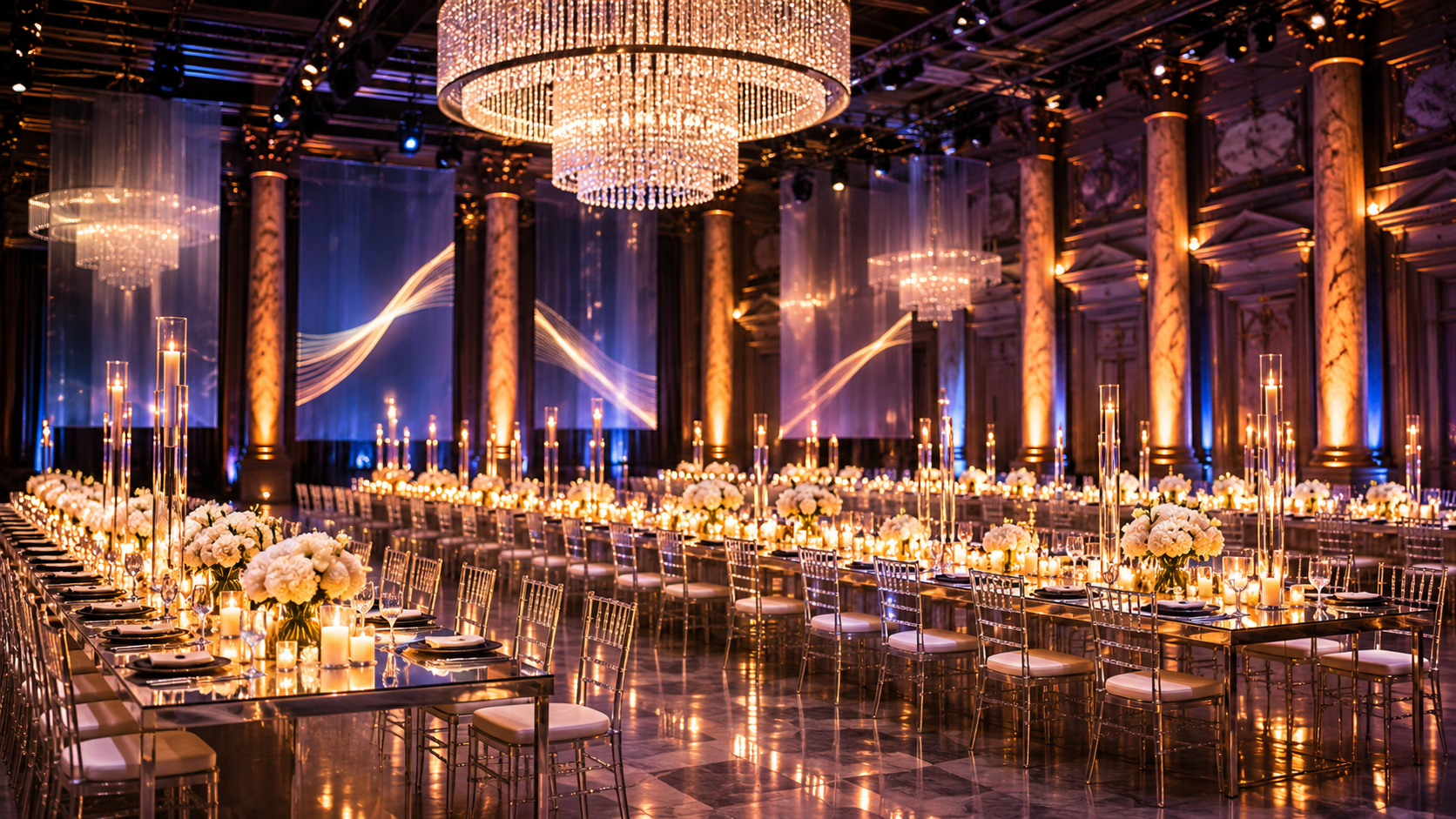
The Honoured Moment
Luxury Awards Ceremonies, NYC
Designing an awards ceremony with theatrical timing, dignified staging, and a guest experience worthy of the honour.
An awards ceremony is theatre with a duty of care. The recipient's moment is the entire evening's purpose, and everything, the staging, the lighting, the length of the program, exists to protect it, a discipline the executive leadership events format shares in a different register.
The venue must hold a stage, sightlines, and a room that can be quiet on command. The discipline is restraint in the program and generosity in the moment: short speeches, long applause, and a room arranged so every guest can witness, the choreography the formal dinner planning guide guide treats in detail.
The Audience
Industry bodies and corporations staging awards that must feel like an honour rather than a function.
Discuss This Event TypeIdeal Ambiance
Formal and anticipatory. Uplighting, a defined stage, and a hush before the moment. The room should feel like a theatre that takes its subject seriously.
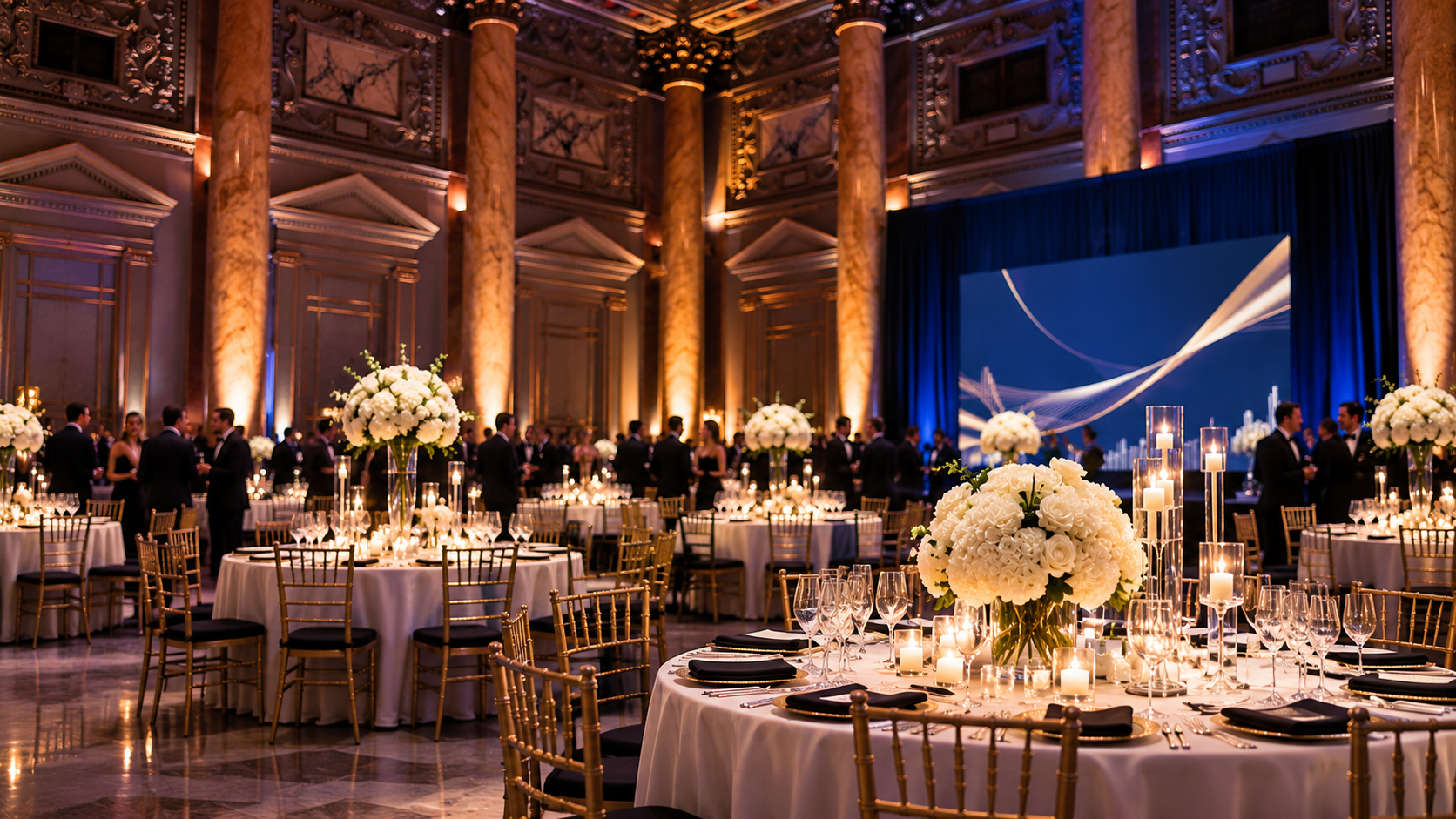
Hospitality Needs
What the room owes the guest
- A pre-ceremony reception that warms the room without rushing it.
- Seated dinner with the program between courses.
- Clear sightlines and a sound system that flatters the voice.
- A composed close, recipients honoured, guests not exhausted.
Guest Experience
The impression that lasts
- Seating arranged so recipients and their parties are central.
- A program paced so attention never flags.
- A post-ceremony moment that lets the honour land.
Privacy Requirements
Discretion by design
Whole-venue booking is typical; the room is the stage. Control entry so the audience is the only audience.
Catering Considerations
The menu in service
A formal seated dinner with the ceremony woven between courses. Time the kitchen to the program so courses never compete with speeches, the same timing discipline the black-tie corporate dinners format demands.
Seating Formats
Formats that suit the occasion
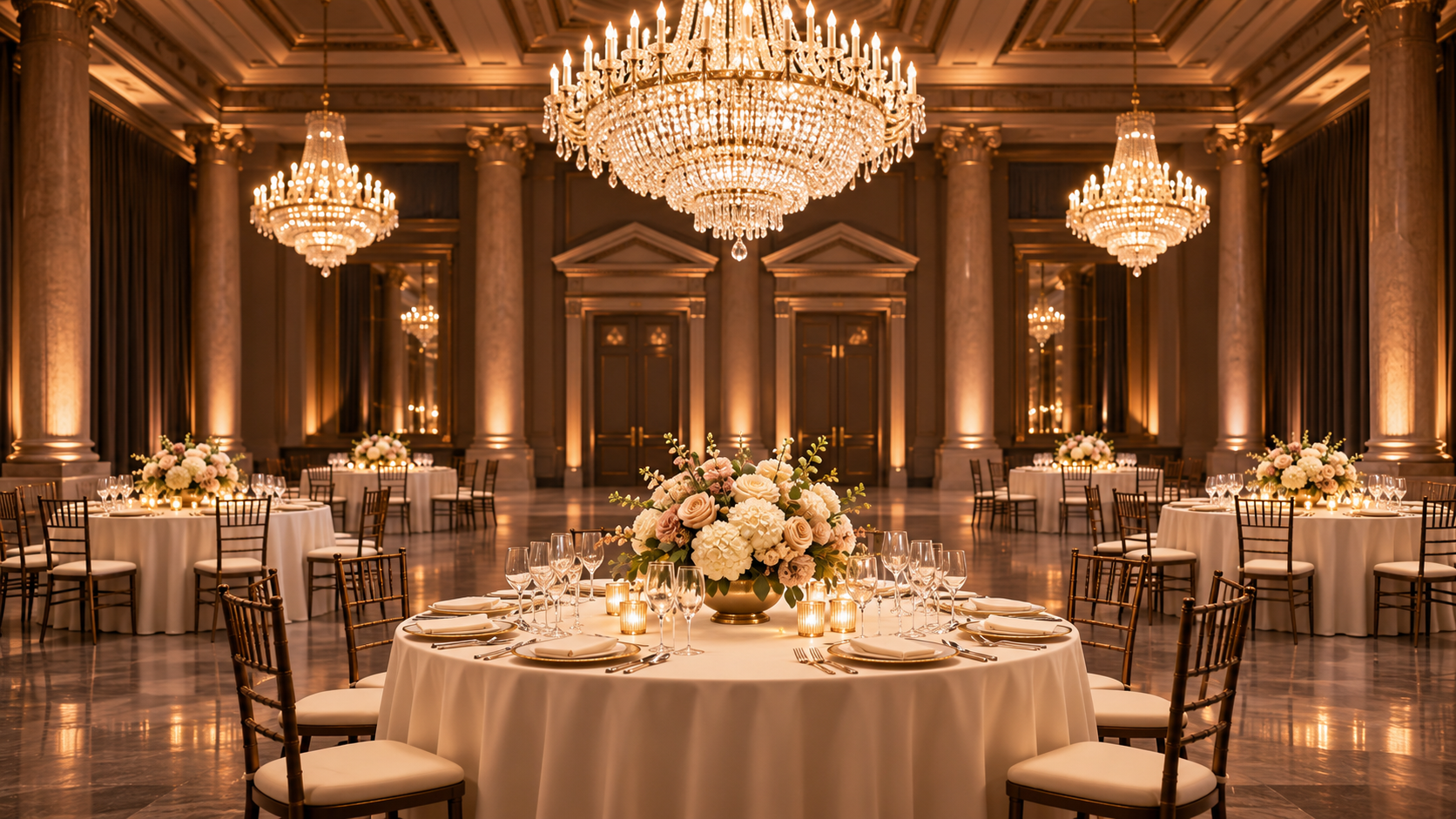
Theatre
Rows facing the stage for the ceremony itself.
Banquet
Round tables with the stage as focal point.
Stage-and-dinner
A raised stage with seated dinner surrounding.
Planning Tips
From the host's brief
Keep the program under ninety minutes; fatigue dulls applause.
Rehearse the recipient's walk and the lighting cue.
Brief the host to name, pause, and let the room respond.
Stage the awards between courses, never before food.
A host's final checklist
- Confirm the stage, sightlines, and production against the ceremony you want.
- Hold the date early; gala and awards dates book furthest ahead of all.
- Verify the room's capacity against the seating and the stage together.
- Walk the space at the hour of your ceremony to judge light and scale.
Before you sign
Confirm the stage build, the staffing, and the run-of-show window in the contract. The ceremony's formality is protected by the terms that govern the room.
Recognition Made Formal, In Depth
Planning a luxury awards ceremony in New York City
A luxury awards ceremony is the format where recognition is made formal, and the venue that hosts it must hold ceremony without losing warmth. This section breaks down what makes a New York room right for an awards ceremony, from the sightlines that let every guest see to the production that supports the moment.
The room that holds ceremony
A luxury awards ceremony venue is chosen for its ability to hold ceremony, which means a room with the architecture for it, the sightlines that let every guest see the stage, and the scale that gives the moment its weight. A room that is too low or too wide will flatten the ceremony; one with the height and the focus will give it the gravity the format requires. The room's architecture is the first quality to assess.
The sightlines are the second. A ceremony in which a third of the room cannot see the stage is a ceremony that has failed a third of its guests. Confirm the room's sightlines at the guest count, and plan the staging and the seating to ensure every guest has a clear view of the moment of recognition. The production should support the sightlines, not compete with them.
- Choose the room for its ability to hold ceremony, with architecture and sightlines.
- A room too low or too wide flattens the ceremony; height and focus give it gravity.
- Confirm the sightlines at the guest count; a third of the room must not be excluded.
- Plan staging and seating so every guest has a clear view of the moment of recognition.
The stage and the moment
The stage is the focal point of an awards ceremony, and its design should give the moment of recognition its weight. A stage that is too large will dwarf the recipient; one that is too small will diminish the moment. The lighting should focus on the recipient at the moment of the award, and the sound should carry the citation without overwhelming the room.
The production that supports the moment
The production at an awards ceremony should support the moment rather than overwhelm it. Lighting that focuses on the recipient, sound that carries the citation clearly, and a run of show that holds the pacing are each a decision made in the brief. A production that competes with the recognition will diminish the moment; one that supports it will give it the weight the format requires.
Confirm the run of show with the venue and the production team in advance. The timing of each award, the music, the lighting, and the staging of the recipient are each a cue that should be rehearsed. A ceremony that runs without a hitch holds the dignity of the recognition; one that fumbles the cues diminishes it, and the difference is the difference between a production that was planned and one that was assumed.
- The production should support the moment rather than overwhelm it.
- Lighting, sound, and the run of show are each a decision made in the brief.
- Confirm the run of show in advance; rehearse the cues for each award.
- A ceremony that runs without a hitch holds the dignity of the recognition.
The Ceremony in Practice
Running a luxury awards ceremony end to end
An awards ceremony is a produced event, and the host's discipline is what holds it together. This section sets out the decisions a considered host makes to run the ceremony with dignity.
The reception and the dinner
The reception and the dinner that frame an awards ceremony set the tone of the evening. A reception that allows the guests to settle, a dinner that is paced to end before the ceremony begins, and a transition between the two that is handled with intention are the structure that serves the format. A ceremony that follows a rushed dinner will be met with a restless room; one that follows a considered dinner will be met with a room ready to recognize.
Plan the transition from dinner to ceremony deliberately. The guests should move from the dinner to the ceremony room without confusion, and the ceremony should begin promptly once the room is seated. A delay between the dinner and the ceremony is the surest way to lose the energy the dinner built, and a prompt start is the surest way to hold it.
- The reception and dinner frame the ceremony and set the tone.
- A reception, a paced dinner, and an intentional transition serve the format.
- A ceremony after a rushed dinner meets a restless room; after a considered one, a ready room.
- Plan the transition deliberately; a prompt start holds the energy the dinner built.
The close and the recognition
The close of an awards ceremony is the host's last act, and it should leave the recipients with the dignity of the recognition. A final word that honors the recipients, a clear signal that the ceremony has concluded, and an invitation to continue the evening are the marks of a host who has held the format. A ceremony that ends abruptly diminishes the recognition; one that closes with composure completes it.
The follow-through is what carries the recognition forward. A note to each recipient the next morning, a record of the evening, and a token that recalls the moment are the gestures that complete the recognition. They are the details most often omitted, and the ones most remembered, and they are the marks of an awards ceremony that has been planned end to end.
- The close should leave the recipients with the dignity of the recognition.
- A final word, a clear signal, and an invitation to continue are the marks of a held ceremony.
- An abrupt close diminishes the recognition; a composed close completes it.
- A morning note and a token that recalls the moment complete the recognition.
Frequently Asked Questions
Luxury Awards Ceremonies, NYC, questions executive hosts ask
The detail that distinguishes a considered occasion from a routine one. These are the questions our advisors are asked most often.
Still planning your occasion? Request a private event proposal.
Continue Reading
Related event types & guides
Begin the Conversation
Request a Private Event Proposal
Tell us about the occasion, the guest of honor, and the impression you intend to make. We will respond with considered guidance on venue selection, hospitality, and the sequence of a luxury corporate event.